
The Essential Algorithm Behind Digital Randomness
Casino games don’t use genuinely random events such as radioactive decay or atmospheric noise https://halalcasino.it/. They operate on a Pseudo-Random Number Generator, or PRNG, a defined algorithm that starts with a seed value. The algorithm processes that seed using mathematical formulas, commonly modular arithmetic and bitwise operations, to create a new number that seems completely unrelated to the input. That result becomes the next seed, creating a continuous loop of values that can stretch for billions of iterations before repeating. Advanced PRNGs like the Mersenne Twister have periods so immense they surpass the estimated atoms in the observable universe. At Halal Casino, this numerical output maps directly onto game mechanics, dividing a generated integer by 37 for roulette games or matching it against a precise symbol table to stop a slot reel.
The essential point: the algorithm has no memory. If the PRNG translates to three blackjack losses in a row, the probability of the next hand remains precisely what the game rules dictate, uninfluenced by prior results. The generator is only as random as its seed source. To avoid predictability, regulated operators supply the algorithm with entropy from unpredictable physical inputs, such as the microsecond timing of server requests, hardware thermal noise, or other system-level events. By merging a high-entropy seed with a cryptographically secure algorithm, the casino makes sure that even someone who knew the full code could not predict the next outcome without access to the live seed. That seed constantly refreshes and remains isolated from the player-facing interface, making real-time prediction impossible and securing every stake placed on the digital platform. This design is essential to fair play.
In what manner RNG Integrity Guarantees Bonus Wagering Requirements
Sign-up bonuses and deposit matches carry wagering requirements that define how many times bonus funds must be used before withdrawal. The RNG acts as the impartial referee during this process. A common fear is that games shift to a hard mode when bonus funds are active. In a licensed environment, the RNG does not get a flag from the account server marking a player as clearing a bonus. The game client submits a spin request, and the RNG provides a result based on the certified RTP. The operator’s long-run edge is already part of the game’s return percentage, so dynamic difficulty adjustments are unnecessary and would threaten the certification that keeps the platform legitimate. The same RNG serves deposit players and bonus players alike. No account state alters the algorithm’s core routine. This separation is confirmed by the same labs that certify the game.
Still, RTP and volatility work together with wagering rules in ways players should understand. Different games contribute different percentages to a playthrough target because their RNG profiles impact risk. A low-volatility slot with a 98 percent return might add only half toward the requirement, while a high-volatility game with a 94 percent return counts fully. This is a balancing mechanism, not a trick. If a player could clear a bonus on a 99.5 percent RTP game, the casino’s statistical edge would be so thin that bonus offers become arbitrage opportunities. The RNG guarantees the game behaves exactly as described, allowing the wagering engine to track the true value of every spin rather than chasing a moving target. Wagering is a mathematical challenge, not a shifting obstacle. Without it, bonus terms would be not binding. With it, the offer remains fair to both sides.
The Function of RNG in Live Dealer Game Integration
Live dealer games merge real-world action with digital systems, and RNGs fulfill an essential supporting role. In standard live blackjack, a human dealer draws tangible cards, so no PRNG decides the card value. Yet the wagering interface, chat functions, and random prize awards or enhanced multipliers are based on RNG technology. Many live game programs are completely RNG-driven despite the presence of a host. A host may activate a button that activates a approved generator, but does not influence the result. This dispels anxieties about croupier manipulation while maintaining the human atmosphere. The RNG works behind the video stream, making sure that bonus mechanics remain statistically fair even when the show seems social and tangible. The combined design expands game options without compromising integrity. Users receive the optimal of real-world presence and approved mechanics
Cryptographically Fair Systems Compared to Standard RNGs
A expanding segment of online gambling utilizes provably fair algorithms, a cryptographic model that deviates sharply from the black-box PRNG. In a standard setup, the server produces a secret seed, and the player must rely on the casino and testing lab. A provably fair system distributes seed generation between server and client. The casino produces a server seed and provides its cryptographic hash with the player before the bet is placed. The player supplies a client seed. After the outcome, the casino discloses the original server seed so the player can check that the hash matches and the casino did not alter seeds. The final result is obtained by merging both seeds through a SHA-256 hashing algorithm, turning the player into an auditor who can rerun the formula on any personal device. This verification does not require advanced coding skills. It is a standard feature.
Halal Casino runs primarily on certified traditional RNGs that satisfy strict regulatory standards. Traditional RNGs deliver a different kind of protection: liability. If a certified generator fails, the testing lab and regulator can impose significant fines. This model fits a handpicked, high-volume casino providing thousands of games from multiple studios without requiring every player to run a hash check. The downside is the black-box perception, since players cannot audit the server seed in real time. To narrow this gap, operators more and more offer post-hoc game verification tools. A player can submit a round ID to view the server seed, its hashed value, and the mathematical outcome, confirming that no tampering occurred after the fact while maintaining the simplicity of traditional play. This brings auditability without introducing friction. The player experience stays uncomplicated and rapid.
How Independent Testing Labs Verify Fair Play
Trustworthy virtual casinos don’t rely on blind trust. Independent agencies like iTech Labs, Gaming Laboratories International, and BMM Testlabs subject RNG systems to rigorous independent testing. The process starts with examining the underlying code to eliminate concealed backdoors enabling retrospective odds manipulation. The essential process involves statistics. Agencies perform the RNG billions of iterations, employing chi-squared tests, the NIST statistical test suite, and Marsaglia’s diehard battery. These techniques reveal minor deviations undetectable to the average player, such as a roulette number appearing 2.75 percent of the time instead of the expected 2.70 percent over millions of spins. The certification is based on quantifiable statistical results instead of a brief verification. The lab’s seal on a site represents a genuine indicator of fairness, far more than decoration.
For players at Halal Casino, the certification is shown as an interactive seal in the footer. Clicking the seal leads to the laboratory’s verified report, proving that published payout rates correspond to the true mathematical behavior. Agencies also inspect the integration, not just isolated RNG code. The original creator may deliver flawless software, but an operator could install it incorrectly. The testing body checks the active server setup to confirm the certified generator is being called rather than a manipulated copy. Continuous oversight is crucial since an old certification becomes invalid after software updates. Testing bodies carry out monthly or quarterly audits to guarantee the entropy generator is functioning properly and no subtle pattern has entered the system, providing ongoing security for all bets. The approval is not permanent.
Translating Numbers to Slots and Decks, & Dice
Slot Machine Icon Mapping

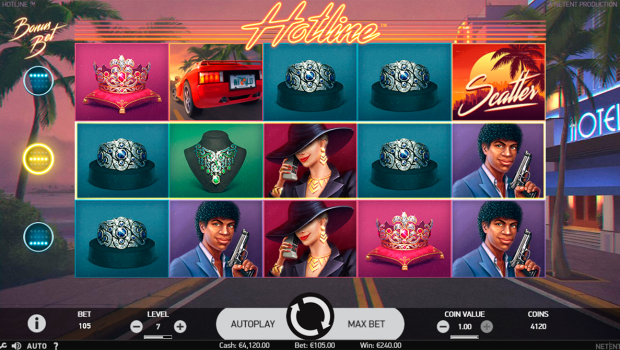
The raw RNG output is usually a huge integer, but a slot machine demands a certain symbol on a payline. The mapping uses balanced probability. Picture a five-reel slot with 256 virtual stops per reel. The RNG generates a number, and the software divides it by 256, using the remainder to pick a stop. Game designers do not assign equal stops to every symbol. A high-paying jackpot symbol might occupy only two virtual stops, while a low-paying cherry fills forty. This structure creates near-misses and controls volatility. When a player sees a jackpot symbol float just off the payline, it is not a cosmic tease; the virtual reel strip has been built to show that symbol often without paying it. The RNG chooses the stop, and the mapping does the rest, ensuring actual hold aligns with theoretical RTP over millions of spins.
Table RNG
Digital table games employ direct but just as rigorous mapping. In typical online blackjack, the RNG does not simulate a physical shoe of 416 cards that diminishes unless the game particularly advertises memory features. It picks a value between 1 and 52, mapping it instantly to a card rank and suit. Card counting is thus not possible in RNG-driven table games. In roulette, the mapping is a modulo operation against 37 or 38, but timing is essential. The number is chosen the instant the player confirms the bet, not after the virtual ball animation executes. The visual spin is entirely cosmetic, generating suspense while the result is already set in server logs. This pre-determination preserves bet integrity, because no browser refresh or connection delay can alter an outcome once the RNG has fired. Every bet is fixed at confirmation.
Mobile Gaming and RNG Performance Consistency
Mobile gaming brought a technical issue: device entropy. Server rooms often have HSMs, while phones rely on sensor jitter, screen timing, and OS entropy pools. In a current online casino, however, the phone does not produce random values. The browser or client forwards instructions to a server where the certified PRNG functions. That system creates the output and streams back an animation. This server-centric model keeps RNG consistency agnostic to the user’s device, whether it is a high-end phone or a low-cost tablet. It also avoids a weak mobile entropy source from causing small biases into critical game logic. The mobile device is a terminal, not the entropy source. This architecture keeps every device identical in math. Users can change devices without altering their odds. Only the display and controls shift locally. The system stays the sole source of truth.
Server-side generation also preserves information integrity on unstable connections. If the RNG system resided on the mobile device, a disconnect during a game could corrupt the game state and lead to arguments. By maintaining the random number generator on the backend, the casino maintains an complete transaction record. If a player’s train goes into a tunnel and the video stream interrupts while the reels are spinning, the backend has already resolved the bet. The gamer can reconnect, review game history, and view the precise outcome determined at the time of the bet. Power-saving modes and speed reductions cannot skew entropy collection on the device, because the phone never generates the critical random value. Even a lost connection cannot reverse or repeat the game. The record exists on the casino backend, open for inspection. This eliminates a frequent source of user dispute. The architecture serves both operator and player.
FAQ
Does an RNG remember prior spins?
Absolutely not. A correctly implemented Pseudo-Random Number Generator has does not remember past outcomes. It relies on a mathematical algorithm that yields independent results each time it is called. The notion that a slot is due after a losing streak is the gambler’s fallacy. Any spin is an isolated event with the same probability as the previous one, regardless of the history visible on the display.
How can I verify a game is fair at an online casino?
Look at the casino footer for verification seals from independent testing laboratories such as iTech Labs or GLI. Such seals should be clickable and link to a live certificate validating the RNG. Trustworthy casinos also provide game history logs where players can review server seeds and previous results to confirm no manipulation occurred after placing phd.uniroma1.it a bet.
Is a live dealer game using an RNG?
That depends on the game. Standard live blackjack and baccarat use physical cards and no RNG for card results. Numerous live game shows use an RNG for bonus multipliers or prize drops. Lightning Roulette integrates a physical wheel with an RNG that chooses lucky numbers and payout multipliers before the ball lands.
Can playing faster change the RNG results?
Playing faster does not alter the odds per spin, but it raises the total number of bets placed per hour. The RNG produces a fresh number for every spin regardless of speed. As the house edge is set, higher volume hastens the projected hold taken from a bankroll, but the game’s return-to-player percentage remains the same.
Can a casino adjust the RTP of a slot from a distance?
In a authorized and regulated environment, a casino cannot in real time adjust a slot’s return-to-player percentage at will. The RTP is fixed into a configuration file that is verified and verified by the testing lab. Any change requires full re-certification or swapping out the game client. Operators cannot simply toggle a setting to tighten payouts.
Explain the variance between volatility and RNG?
The RNG is the core that creates random numbers. Volatility is a game design parameter that maps those numbers into wins. A high-volatility game maps RNG output to infrequent but substantial payouts. A low-volatility game converts the same style of random output to regular but minor wins. The RNG remains unbiased; volatility determines the feel.
Is it true that mobile casino games more predictable than desktop games?
Games on mobile are equally random because the RNG calculation takes place on the casino’s main server, not on the phone. The mobile device simply displays the graphical outcome. The server-side setup maintains random number generation consistent across platforms, not impacted by mobile hardware entropy pools, battery-saving modes, or operating system limitations.