

Hold and Win games constitute a unique slot type, one where persistence and bankroll firepower meet. For big spenders in the Netherlands, these games merge high volatility with the chance to lock in significant cash prizes during the trademark respin round. The core attraction is not regular small wins. It’s the growing tension of the bonus feature, where each sticky symbol pushes the total payout toward the top jackpot tiers. Knowing how to size bets, when to activate the bonus buy, and which mathematical profiles fit larger bankrolls turns a casual session into a calculated pursuit. This guide covers the mechanics, payout structures, and strategic tools that count the most when you’re playing for serious stakes.
Understanding the Hold and Win System
Every Hold and Win game centres on a respin bonus. You initiate it by getting six or more cash or jackpot symbols anywhere on the reels. When that happens, the triggering symbols lock in place, and you receive three respins. Each new cash or jackpot symbol that appears remains and refreshes the respin counter to three. The round ends when you run out of respins or cover every position on the grid. The mechanic builds up: the more symbols you gather early, the better your chance of filling the screen and taking the maximum prize, usually the Grand jackpot shown above the reels.
The feature is especially attractive to high rollers because cash symbol values increase directly with your bet. At a €50 spin, every collected prize is increased by fifty times the base value. The Mini, Minor, Major, and Grand jackpot tiers also increase by total bet, so the top fixed jackpot can reach tens of thousands of euros on maximum wagers. We always review the paytable to see whether jackpots are fixed or progressive, because that changes the expected value when you wager at higher limits.
Reel Setup and Payline Configuration
Most Hold and Win games use a 5×3 grid. Some grow to additional rows for additional paylines. Paylines usually run from 25 fixed paylines to 243 paylines, which means wins form from left to right on neighboring reels, irrespective of the exact position. The symbol hierarchy is very important in the base game, because that’s what sustains your funds alive between bonus rounds. High-paying icons are often wild animals, precious stones, or traditional sevens. Lower-paying card royals fill the rest. The wild substitutes for all standard symbols, and in certain titles it also gives on its accord for a full line. That can be a nice boost during a cold streak.
Scatter signs often do double https://www.knack.be/nieuws/moeten-wij-echt-met-de-lotto-spelen-zodat-er-geld-naar-goede-doelen-gaat/ duty in Hold and Win games. They can initiate bonus spins, award on-the-spot rewards, or boost the total bet when three or more show up. A special bonus icon that triggers the Hold and Win feature is common. We consistently check whether that sign occurs only in the base game or also during free spins. Some slots let the re-spin mechanic initiate inside complimentary spins, and those versions often include more locked wilds or multiplier enhancements. Those features can dramatically boost the end result when you are gaming at big wagers.
Extra Features Beyond the Hold and Win Round
The Hold and Win respin is the centrepiece, but many games add free spins, multiplier wilds, and symbol upgrades. Free spins typically trigger when you hit three or more scatter symbols. They usually come with a fixed number of spins, like 10 or 15. Inside those rounds, you’ll frequently see sticky wilds, expanding reels, or more cash symbols. Some games enable the Hold and Win feature trigger inside free spins with a assured minimum number of triggering symbols. That raises the expected value of the bonus a lot, making it a top target for high rollers who use the bonus buy option.
Multiplier mechanics introduce another layer of strategy. Some Hold and Win slots apply a global multiplier that grows with each respin during the bonus round. Others give a random multiplier to collected cash symbols at the end of the feature. We’ve seen games where a 2x or 3x multiplier doubles or triples the final payout, turning a solid win into a session-defining result. When we evaluate a title, we search for these extra modifiers because they magnify the impact of high bets without requiring extra trigger luck. We generally avoid the optional gamble feature. It adds unnecessary risk and doesn’t fit a disciplined high-roller strategy.
High-Stakes Bankroll Management for Hold and Win Rounds
Bankroll management is the foundation of any high-stakes Hold and Win session. A common rule we follow: have at least 300 to 500 times the base bet as a session bankroll to handle the high volatility. At a €50 spin, that means €15,000 to €25,000. That safety net gets you through inevitable dry spells without the temptation to chase losses. We also set a strict stop-loss limit, usually 30% to 40% of the session bankroll. And we set a win goal: once we double the starting amount, we stop or take a break. Those rules keep the session disciplined and prevent emotional decisions.
Bet sizing should not stay static. We often start at a moderate level to assess the game’s rhythm, then increase the stake when we see a pattern of bonus triggers or when we’re in profit. Some high rollers use flat betting to increase spins and bonus opportunities. Others scale up aggressively after a losing streak, aiming to capitalise on the eventual bonus. A hybrid strategy works best for us: keep a base bet at no more than 0.5% of the session bankroll, and only bump it up after a bonus round pays above a set threshold. That method manages risk while still utilising the high multiplier potential.
Optimal Timing for the Bonus Buy
The bonus buy feature enables you to acquire direct entry into the Hold-and-Win respin round for a fixed multiplier of the overall wager. For whales, that represents a strong accelerator, but we use it judiciously. The price typically spans from 50x to 100x the base stake. At a €50 spin, that equates to a €2,500 to €5,000 buy-in. We only purchase the feature when the projected value from the round, derived from the game’s published RTP and our own evaluation, surpasses the cost by a comfortable margin. In numerous games, the average feature payout falls around 60x to 80x the stake. That makes a 100x entry a losing decision over the long run barring the Grand jackpot is unusually large.

We additionally evaluate the psychological and budget effect. Buying rounds quickens the game and can cause rapid drawdowns if the mechanic falls short. We limit buy-ins at a small percentage of the session bankroll, around 10% to 15%, and solely after we’ve verified how the game behaves in standard play. Some studios offer a bonus buy with improved RTP, which is more appealing. Be sure to check the info panel to see if the RTP varies with the feature buy. A greater RTP on the buy feature can turn it from a risk into a mathematical advantage. That’s exactly the opportunity we look for as big spenders.
Risk level and RTP: What High Rollers Need Know
Hold and Win games run on high volatility. Returns concentrate in a few big wins, not scattered evenly across a session. For a high roller, that’s simultaneously the risk and the reward. Anticipate long stretches where the balance grinds down, then bonus rounds that deliver 500x to 5,000x the stake or more. The theoretical return to player (RTP) usually lands between 95.5% and 96.5%. Always look for the highest published figure for the specific title and jurisdiction. Even a half-percentage difference accumulates fast when you cycle through tens of thousands of euros in wagers.
We also examine at how often the Hold and Win feature actually hits. Some games trigger the respin round about once every 150 to 250 spins. Others are rarer but contain richer symbol values. High rollers should prefer games where the bonus lands often enough to avoid long drawdowns, unless the max win cap is high enough to be worth the wait. Volatility indices are seldom published, so we evaluate in demo mode first. We observe how many spins it takes to see a bonus and the average payout. That practical testing tells us whether the game’s rhythm can handle a larger bet or needs a more conservative approach.
Stake Range and Maximum Win Potential
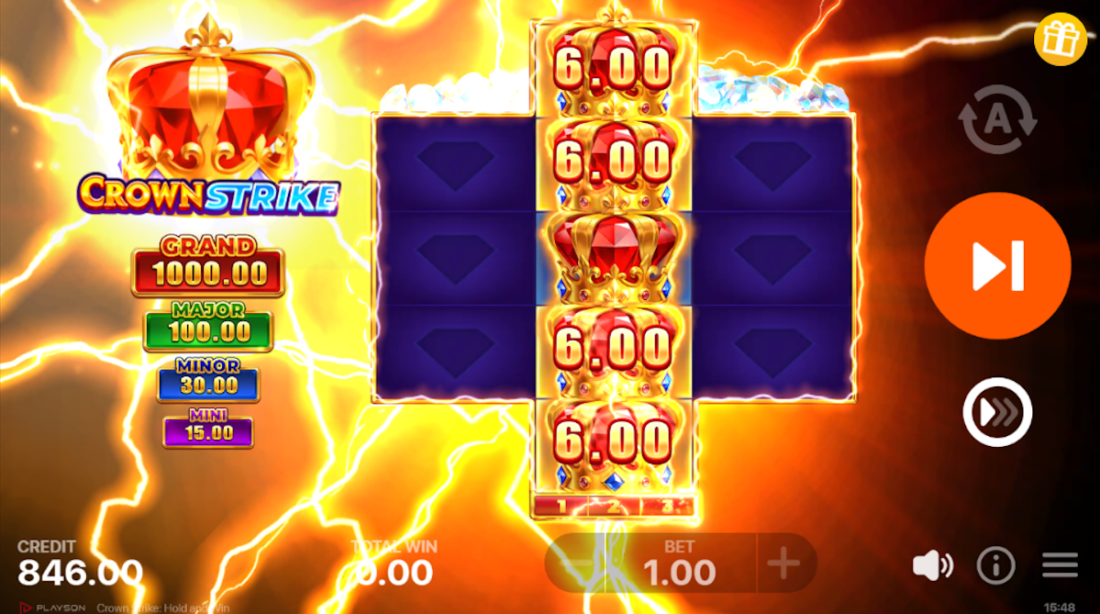
Wager ranges in Hold and Win games commonly start at €0.20 and go up to €100 per spin. Many providers now increase the upper limit to €200 or even €500 for high-stakes players. We always confirm the maximum bet in the Netherlands-facing version of a game, because local regulations can cap the top wager. Max win potential is usually promoted as a multiple of the stake. Common caps are 5,000x, 10,000x, and in some premium titles 25,000x. At a €100 spin, a 5,000x win means €500,000. That’s a realistic ceiling for fixed-jackpot Hold and Win slots.
We scrutinize at how the max win works. In many games, filling the whole grid with cash symbols during the respin round grants the Grand jackpot. That’s often the only way to reach the headline figure. Some games feature a separate progressive jackpot that starts at a base amount and grows with every wager across the network. Fixed jackpots are more predictable for high rollers because the prize is a known multiple of the bet. Progressives can offer life-changing sums but often lower the base game RTP. We prefer games where the max win comes from the core mechanic, not a separate random trigger.
Picking the Right Hold and Win Title for Maximum Edge
Not all Hold and Win games are made the same. Selecting the right title can tip the odds slightly in your favour. We analyze RTP figures, jackpot structures, and respin frequency across providers. Games with a higher base RTP and a lower Grand jackpot contribution tend to return more value through regular cash symbol collections. That suits high rollers who want sustained play over a single massive hit. We also favor titles with a bonus buy feature. That enables you skip the base game entirely and go straight to the respin round at a known cost, often 50x to 100x the bet.
Provider reputation matters. Established studios like Pragmatic Play, Playson, and iSoftBet have put out many Hold and Win slots online with transparent maths models. We study game sheets where we can get them and read community data on average bonus values. For high rollers in the Netherlands, we prefer games that support euro currency natively and are certified by recognised testing labs. That confirms the stated RTP and jackpot odds are accurate and that the game behaves consistently under heavy wagering. We also look at the maximum bet limit. Some titles cap wagers below our preferred stake, which makes them useless for high-roller play.
Helpful Tips for Enjoying Hold and Win Games across the Netherlands
Engaging in Hold and Win games as a high roller in the Netherlands means working inside a regulated market that prioritises player safety. Always play at a platform licensed by the Kansspelautoriteit. That guarantees fair games, euro transactions, and access to responsible gambling tools like deposit limits and reality checks. We determine personal time and loss limits before each session and use self-exclusion options if needed. The Dutch market also mandates games to show clear RTP information, which helps with informed choices. Record a detailed record of each session: bet sizes, bonus triggers, and outcomes. That record enables you refine your strategy over time. Finally, treat Hold and Win play as entertainment with a calculated edge, never as guaranteed income. Stay aware of the tax implications on substantial wins under Dutch law.